
Directed by Andrew McCarthy
This movie is a big, fat joke. A chore. A painful-to-watch passion project that endlessly centers on Andrew McCarthy and his long-lost pals (who were… never really his pals…?). He characterizes the film as “a movie about looking for people” — *vomit*.
Look. I’ve never been temporarily famous, so I guess I don’t understand the chokehold the experience apparently has you in decades later, but the grip is tight around McCarthy’s neck.
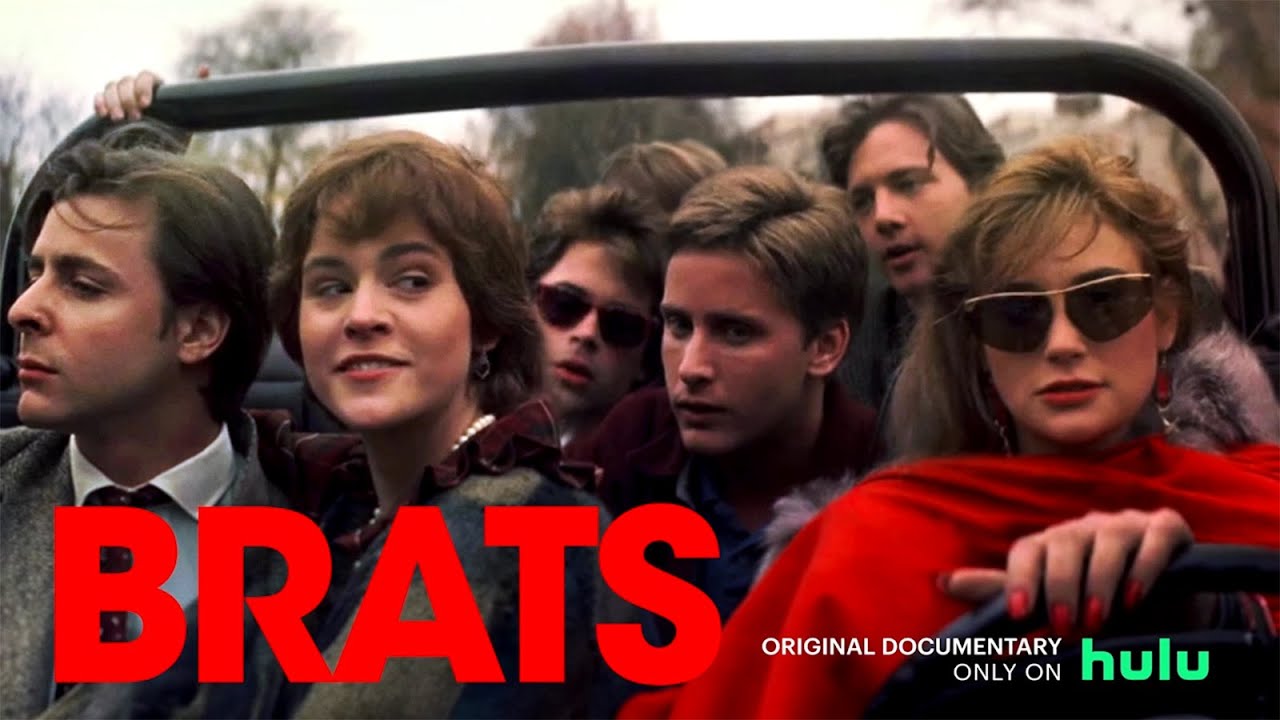
Of the myriad irritations that accumulate while watching Brats, there are three that really pop: Vintage-washed, grainy transition images on door stoops; Slanted camera shots; So, so many “driving in a convertible” scenes.
The cast
It’s not a coincidence that Demi Moore and Rob Lowe — the two members who maintain household name status in the year of this release — were the only two uninterested in group therapy on the subject, with Moore saying “I don’t know if I took it as personally over time,” and suggesting McCarthy allowed himself to be affected by the article more deeply than he should have. “You allowed it to shape your perception of yourself and wasted time on anger instead of moving forward.” Preach, Demi.
Emilio Estevez — fully prepared to complain about all that’s been taken from him as they film from his mansion’s wood-paneled pool house-slash-bar — felt strangely distant from reality in his scenes. Their conversation felt intervention-adjacent and eerie, with absolutely no warmth or genuine emotion.
After 20+ years, McCarthy finally has a face-to-face with the guy who supposedly ruined his life, and he chose to… Calmly accuse him, hug, and leave with no personal resolution. The audience has no choice but to be on David Blum’s side in all of those scenes. His unapologetic energy tastes delicious to everyone totally fed up with McCarthy’s complaints.
Another very strange element: Anthony Michael Hall is never mentioned, even in the “listing Brat Pack members” montage — during which, by the way, McCarthy has to pathetically add himself to the list multiple times.
Final thoughts
The woe-is-me theme of this doc is borderline insufferable — the film makes you wonder what subconscious issues McCarthy and the other today-unsuccessful Brat Packers were (are?) working through that allowed them to use this flimsy, 10-paragraph article to totally halt their success in the 1980s.
It gets 1 single star because it was fun to reminisce on the power of those 80s Brat Pack classics — Malcolm Gladwell’s spotlight was certainly interesting, too.
If you want to look at the Brat Pack movies in a new light and get clarity from one of those actors, your time would be spent much more productively reading Molly Ringwald‘s 2018 “Me Too” piece in the New Yorker.
As for this film — yikes. If you’re out there reading this, Andrew McCarthy, here’s some advice: It’s time to get over it. You’ve written a book, you’ve made this doc. You’re wealthy, well-known, and have experienced more transformative success in your life than 99% of humans ever will. You’re fine. Take a deep breath and let it go.
P.S. I know you didn’t really get Judd Nelson on the phone in that final shot…
This movie is bad.
My rating: 1/5
Leave a Reply