
DIRECTED BY WERNER HERZOG
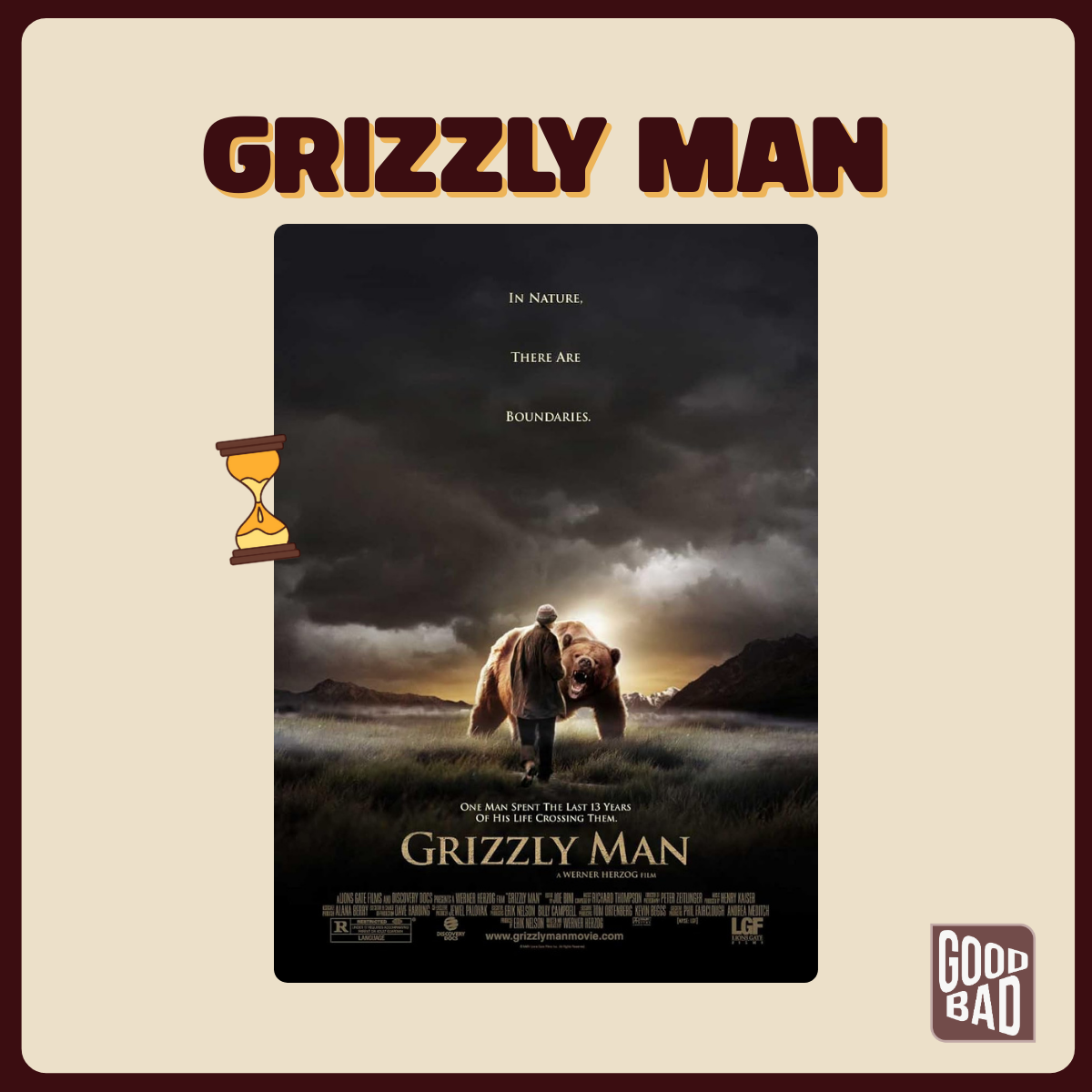
Timothy Treadwell spent 13 summers living among brown bears in southwest Alaska. During this time, he believed the bears came to know and trust him. He spent massive amounts of time alone with them, filming nearly everything and speaking only to the camera & other woodland creatures, like foxes.
In his mind, the bears did not simply tolerate him, they respected him. He considered them friends and family. In the winters, when he was away from Katmai National Park, he spent his time speaking publicly about his bears and their habitat and managing his bear-protection organization, Grizzly People.
At the end of the 2003 season, Treadwell and his girlfriend, Amie Huguenard, encountered travel difficulties while leaving Alaska and decided to stay a week longer than usual. During that time, which coincided with the bears’ more aggressive pre-hibernation state, Treadwell and Huguenard were attacked and killed by a 28-year-old male brown bear.
THE PLOT
There is no doubt Treadwill is charming. He is silly and energetic, full of life and affection for the dangerous creatures he loved. While watching the footage from his decade plus of experience, you can’t help but fall into his delusions. There is proof that they occasionally responded to him positively! He swam with them in rivers, sat amongst them, redirected them when they lumbered toward him.
Director Werner Herzog studied over 100 hours of this footage and transformed it into a narrative documentary. He often offers his own blunt, philosophical takes on what he decided to include.
Herzog shows us Treadwell’s slip into a perceived psychosis, wherein he strongly believed he was the sole protector of these bears from the dangers of poachers. He shows us a man fighting against civilization, drifting further from humanity with every summer he spent in the wild.
Intercutting the footage of Treadwell’s interactions with bears and rants against poachers are interviews with people who knew Timothy: an ex-girlfriend, some friends, the pilot who found him, park rangers, bear experts, his parents. Herzog doesn’t hide the fact that a lot of people thought Timothy was reckless, delusional, even disrespectful to the bears and the land. But he also doesn’t mock him. There is tenderness in how Herzog presents Timothy.
When Treadwell and Huguenard were attacked, the camera was running. The lens cap was on, blocking all visuals, but the audio is clear. During the emotional height of the film, Herzog listens to the audio in front of Treadwell’s ex-girlfriend, who had been entrusted with Treadwell’s belongings. We never hear it.
THE DIRECTION
Werner Herzog is a filmmaker who doesn’t do “sentimentality,” and that’s a big part of why this documentary works. He respects Treadwell enough to show us his footage, let us hear his voice, and understand why he did what he did. Herzog also isn’t afraid to say that he believes Timothy’s romantic view of nature was dangerous and wrong.
Herzog presents Timothy as a deeply flawed, human character who wanted to matter, be special, and find victory from what he perceived to be very meaningful work. But he also shows us that, in the end, nature doesn’t care about any of that.
FINAL THOUGHTS
Timothy Treadwell was a complicated person. He saved himself from human temptations and addictions by escaping to the wild — but that escape became his destruction (and Amie Huguenard’s).
With competing themes of loneliness, emotional illusions, and obsession, this documentary has stayed with me for weeks. It is beautiful but tragic, and uncomfortable in a way that’s hard to shake. I highly recommend it, but be careful about when you watch: stay away from days that have you feeling down about the state of humanity.
this movie is good.
My rating: 4.5/5 stars
Leave a Reply